
By Andrea Montes, member of the Baud team.
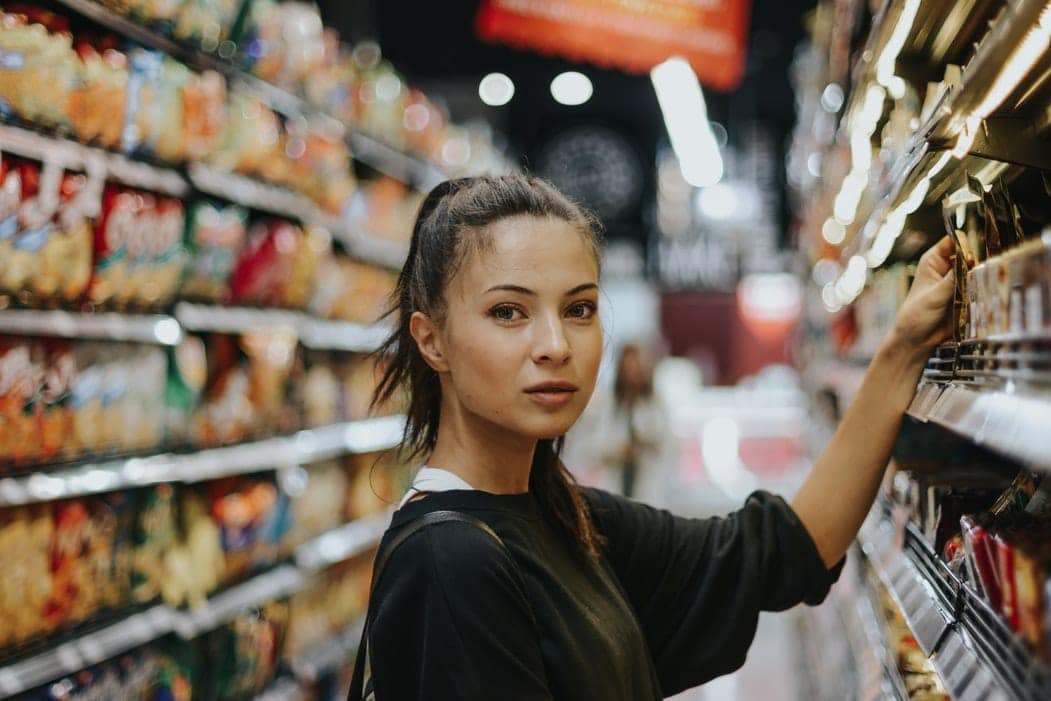
A scribbled list of your favorite products, a half-full shopping cart and one consumption decision after another, infinite, instantaneous, almost automatic. All of them, loaded with answers to unexpressed concerns. We enter a labyrinth of aisles, walking among aisles full of shapes, colors and messages that demand our attention in order to be the chosen option.
The purchase. Or, in other words, that common, everyday routine that, in reality, hides a complex mechanism orchestrated to be what each consumer expects, long before he even knows it.
Over the years, the Food and Beverage industry has successfully charted its own path by adding functional and emotional value to the resolution of basic needs. A sector driven by economic growth that has thrived on innovation and constant diversification. However, social progress and, ultimately, the current critical situation have brought about the transformation of our lifestyle and, therefore, of many of our consumption habits. Today, we are more aware, more demanding, more demanding and more influential consumers, and we expect new responses that combine empathy, functionality and intelligence.
For any Food & Beverage brand, it is therefore essential to open its eyes and, even better, its ears to understand today's consumer and discover what are the small motivations that generate one movement and not another. Only in this way will they be able to create tangible value, provide real solutions and simplify vital moments.
Real-time innovation
The tsunami that has swept away the normality in which we lived just a few months ago has also swept away our old priorities. The consumption of Food & Beverage products in the home has grown exponentially and today demands new solutions that generate a differential experience. What's more, today's consumer is more receptive than ever to trying new products, even in categories that are not yet available. commoditybecause all of them now play a leading role in their daily lives.
Innovation in brands, products or formats must be based on active listening in order to be able to anticipate needs that are still dormant, but it must also be accompanied by a strong internal muscle that responds with agility and operational efficiency to the market through new and improved products in real time.
The new digitalization
To say that our daily reality has become digitized is nothing new, but to understand that the digital experience as we knew it is not valid in the long term is. Although the traditional supermarket is not going to disappear, the growth of sales of Food & Beverage products on digital platforms is not going to disappear. online poses a new paradigm for brands and consumers.
The great challenge emerges in the creation of a digital experience that integrates and evokes key elements of the physical purchase of Food and Beverage products such as sensoriality, expert advice, or the ideal flow of the customer journey. In addition, it is essential to solve the main pain points that continue to be the major barriers to entry for digital commerce, such as speed, reliability and delivery times.
Likewise, the role of the physical store can evolve towards a product display whose objective is convenience and information, leaving the commercial transaction and loyalty for the channel. online. The coexistence between physical space and space will be more and more important. online through synergies and omnichannel.
Loyalty is in the brand
In times of uncertainty, human beings take refuge in the familiar. Due to the complicated health and economic situation we are experiencing, the typical consumer is forced to reduce the cost of his shopping basket. However, the data confirm that they are not willing to sacrifice the value or quality of the products they consume.
Today's consumer focuses on the essentials of a product, avoiding unnecessary aspects or improvements that increase its price, but prioritizing the brand and its guarantee of quality. Consumer loyalty is focused on big brands that generate a sense of trust and familiarity not only in terms of the product but also in relation to the origin and production process. Moreover, even retail brands are beginning to professionalize their discourse and products in order to be competitive and relevant to the big brands.
Feeding the planet
Talking about sustainability today is no longer a choice, it is already an obligation. Specifically, the Food and Beverage industry is one of the most notorious in terms of waste and excessive use of materials that are harmful to the environment.
The consumer, a committed activist, is demanding a profound revision of processes to favor a transition towards a model of trade that is respectful of resources and sustainable for the planet. An evolution that requires not only the personal efforts of consumers and government policies, but also and especially of organizations, their processes and products.
Clean and transparent labels, naked products, reusable packaging and a real purpose at the core of the business are the drivers of a much-needed transformation.
Health above all else
Health is the epicenter of our conversations today and this is directly reflected in the expectations consumers place on the Food and Beverage products they consume.
The search for products that reduce our vulnerability and work for the benefit of our immune system and even our emotional stability is one of the most important drivers The most recurrent purchase methods at present.
So much so that companies must be prepared to be that expert reference to trust. Health and safety go hand in hand to inform, raise awareness and educate people to take care of their own well-being through the products they consume.
These five specific trends for the Food and Beverage industry open up an unlimited spectrum of business opportunities, connections and relevance for all brands that know how to integrate them.
_