
Interviews with Baud's customers and friends
Friend: Boss Continental.
Interviewee: Cristina de Santisteban, Director.
Interviewer: Clara López, member of the Baud team.
Interview date: May 19, 2020.
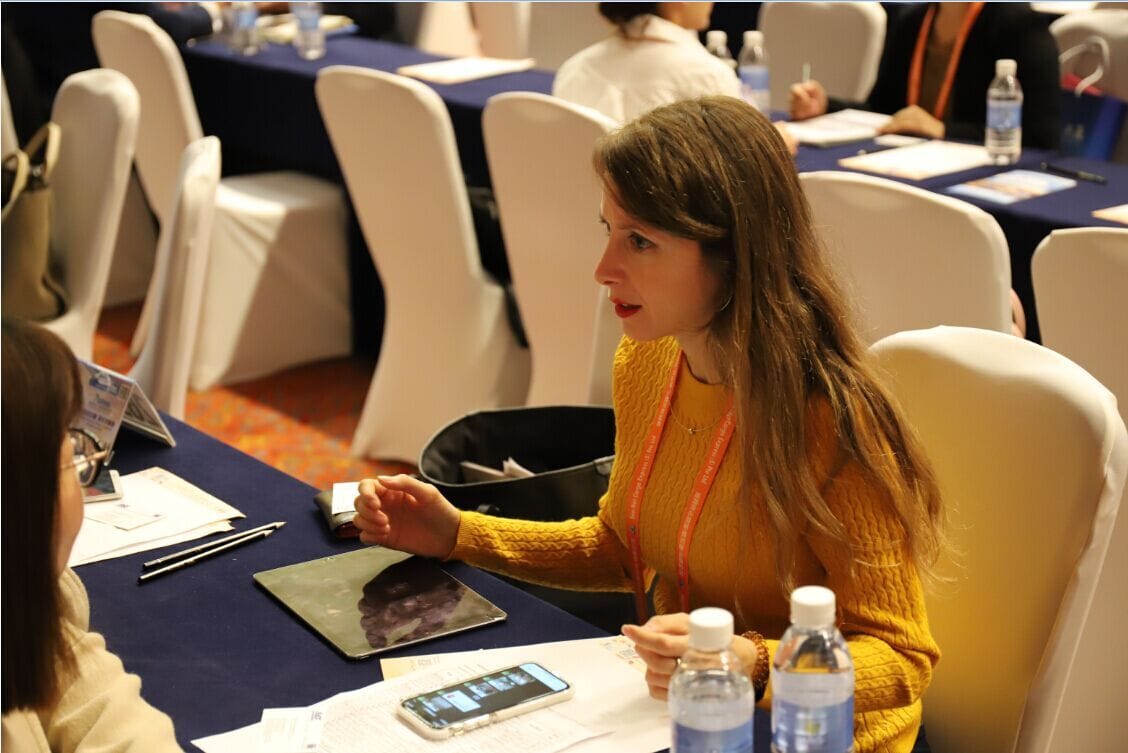
Image: Cristina de Santisteban, Director of Boss Continental.
_
We continue with the Interviews with Clients and Friends of Baud, in which we try to contribute to give voice to those who tell us the most interesting and current things. Today we interview Cristina de Santisteban, Director of Boss Continental, leading logistics company.
Cristina lives her personal and professional life as one. Tenacious, intrapreneurial and marked by her 5-year stay in China, Cristina drives change in her company, constantly transforming the impossible into the possible. Chameleon-like, fighter and positive, she is able to adapt and overcome any situation that is put in front of her.
Since the beginning of the coronavirus crisis, Cristina has been involved along with David, another one of our respondentsin a project to provide respirators to spanish hospitals.And it is not the only project he is going to tell us about.
Interviewer: How do you see the current situation regarding coronavirus?
Cristina: We are going through a very serious and sad situation, although I try to keep the positive side. What we are going through right now is a challenge and at the same time an opportunity for all of us, a situation that has forced us to improve both at company and personal level.
I would like to think that if life denies you one path, sometimes it can be the best thing to follow a more successful one.
E: How did you become Boss Continental to face this situation?
C: In my company it was difficult to implement new changes and this is forcing us to do it. We have been preparing for two years to digitize the company and make everything work from the cloud, but it was costing us because when people don't see it as a necessary change they take more time to adapt. Now, however, it is a much faster and smoother process.
Teleworking was the acid test. I had always wanted to implement it, but I just couldn't get it right. With the coronavirus, from one day to the next we had to make the decision to have our entire company work from home, and it was this process of digitalizing the company that we already had in place that allowed us to be up and running perfectly within a couple of days.
Now there is only one person on duty in the office every day, in shifts and only in the mornings, especially for the collection of documentation, which is essential in a company like ours.
We are connected all the time in tools such as Teams. All the members that make up Boss Continental are accessible all the time, I feel that there is a lot of union among the team and a very big commitment from all the people in this company that is being key for us to be able to function with total normality. I have also realized that there are people who are working much harder and much better in this situation.
«El teletrabajo nos está permitiendo funcionar perfectamente como compañía, y también está permitiendo a nuestros trabajadores tener más tiempo para sí mismos».
Telecommuting is allowing us to function perfectly as a company, and it is also allowing our workers to have more time for themselves outside the workday. There are people who are saving three hours a day commuting from home to work, and this is also very important.
E: To what extent have Boss Continental's values influenced you to tackle the transformation in this way?
C: Very much so, one of our values is to focus on solutions and that is what we did, we did not stand still, we took the reins of the situation from the beginning to provide effective solutions.
Another of our values is shared knowledge, which is materialized in the documentation and accessibility of knowledge, which is very useful for new recruits, for example. This has allowed us to work very well at a distance, because each person always has the information he or she needs at his or her disposal.
«Las empresas no solo tienen que estar ahí cuando las cosas van bien, también tenemos que estar ahí cuando va mal».
E: We have seen many brands that in these times have turned their words and efforts to help society overcome this crisis. How do you value these initiatives?
C: They are always appreciated. We are all going to lose something, we feel fear, doubts, uncertainty about what is to come, so it is time to give. Companies not only have to be there when things are going well, we also have a responsibility to society, we have to be there when things are going badly and this is possible thanks to everyone doing their bit to get out of the situation we are in as soon as possible.
«Hay muchas personas que han dedicado muchas horas de forma gratuita. Me impresionan mucho, deberían ser un ejemplo para todos».
E: How have you transformed yourself, tell us more about initiatives you are carrying out?
C: One of the initiatives we have carried out is the project to provide ventilators to hospitals together with David Carrero and others involved. It is true that now it is at a standstill because fortunately they are no longer needed so much, although we are alert and prepared because you never know when they might be needed again. I remember being on the phone all day, even at night, to see if there was a ventilator available to pick up in any country and transport it quickly to Spain. It was very hard, but rewarding, you left whatever you were doing to help and that is something very nice.
We have also made transports free of charge and some others at cost for our clients who have been donating sanitary material.
And we have done a lot of free consulting to both companies and individuals in helping, especially on issues where we are experts and bring more value such as processing customs clearance. There were many people and companies that wanted to help and bring sanitary material, but they did not know how to do it, they were lost, so we have been informing many companies on how to transport sanitary material, how to overcome customs, how to ask for permits....
It has been a tough time, but it is now normalizing and we at Boss Continental hope that we have done our bit to contribute to this growing normalization.
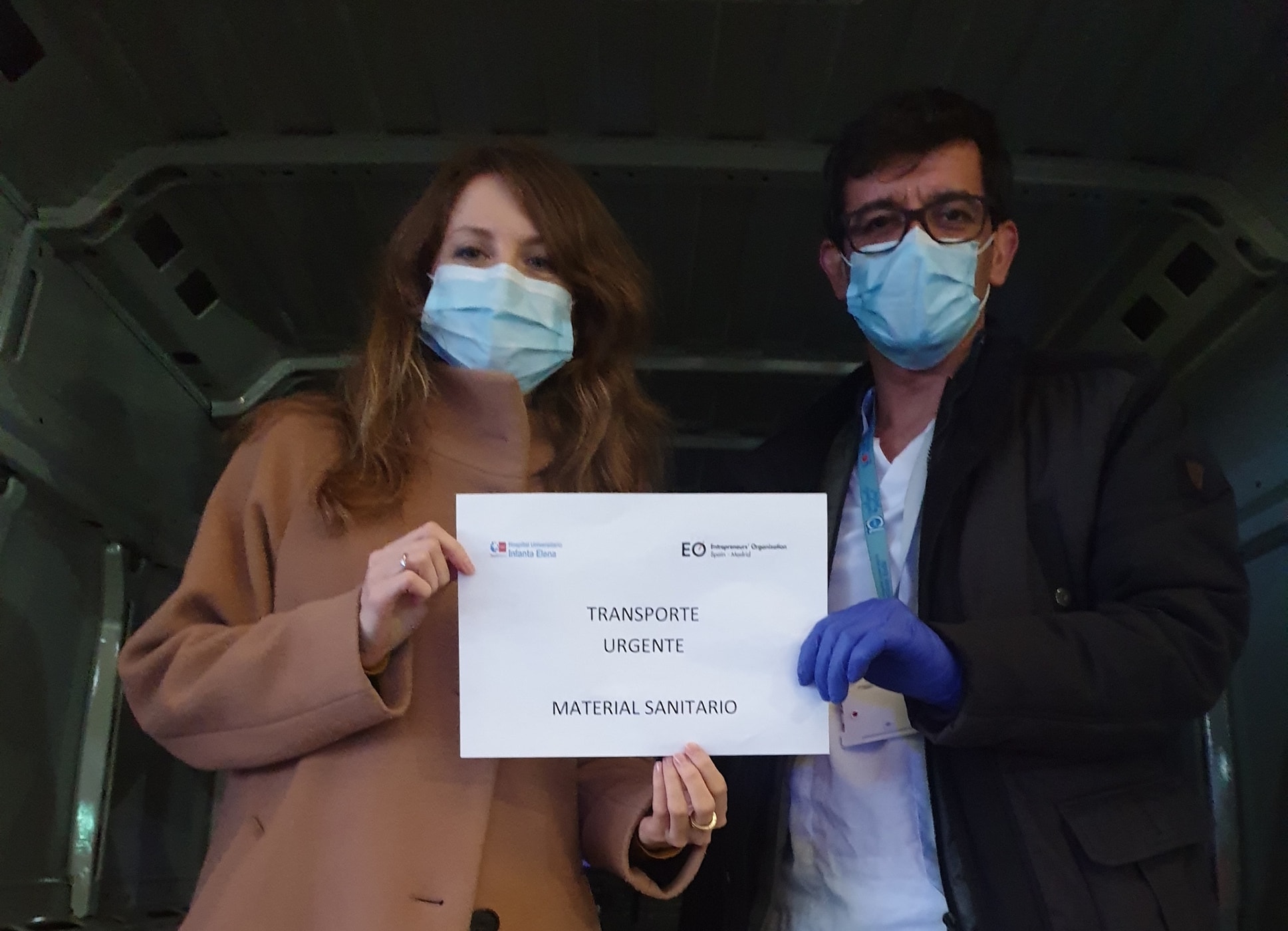
Image: Cristina developing one of her initiatives.
_
E: Tell us about other initiatives that surprised you positively.
C: In Extremadura there are many traditional seamstresses (although sewing in Spain stopped some time ago to move production to China) and I was very surprised by an initiative organized by my colleague LoabreJaime Ruiz, with these women to sew gowns and masks and donate them to hospitals, once again vindicating the value of Spanish sewing.
A similar initiative was carried out by my friend Beatriz Abad, this time in Guadalajara. Each day she would take fabrics to housewives and collect the masks they voluntarily sewed with them to donate.
There are many people who have dedicated many hours to this type of initiatives and also for free. I am very impressed by these actions, they should be an example for everyone and most importantly, a start to provide jobs here in Spain and not take them to other countries, even if the profit margin is reduced, especially now when it is most needed.
«Vamos a estar más preparados para afrontar cualquier situación que pueda venir, de forma mucho más organizada».
E: What do you think life will be like post-coronavirus, how will things change?
C: I imagine a much more socially interconnected world, thanks to digitalization. These days I have connected with my usual friends in Madrid, but also online with those in Shanghai with whom I never used to meet. I like to think that this new way of socializing is here to stay, to continue being close to people, even if you are physically far away.
I imagine we will be more careful, although I hope that fear will not prevail in this regard.
I also like that we are going to be more prepared for everything, to face changes and any situation that may come, in a much more organized way.